 AI Vertaler
OFF
AI Vertaler
OFF
🎶 Father’s Midnight Gospel
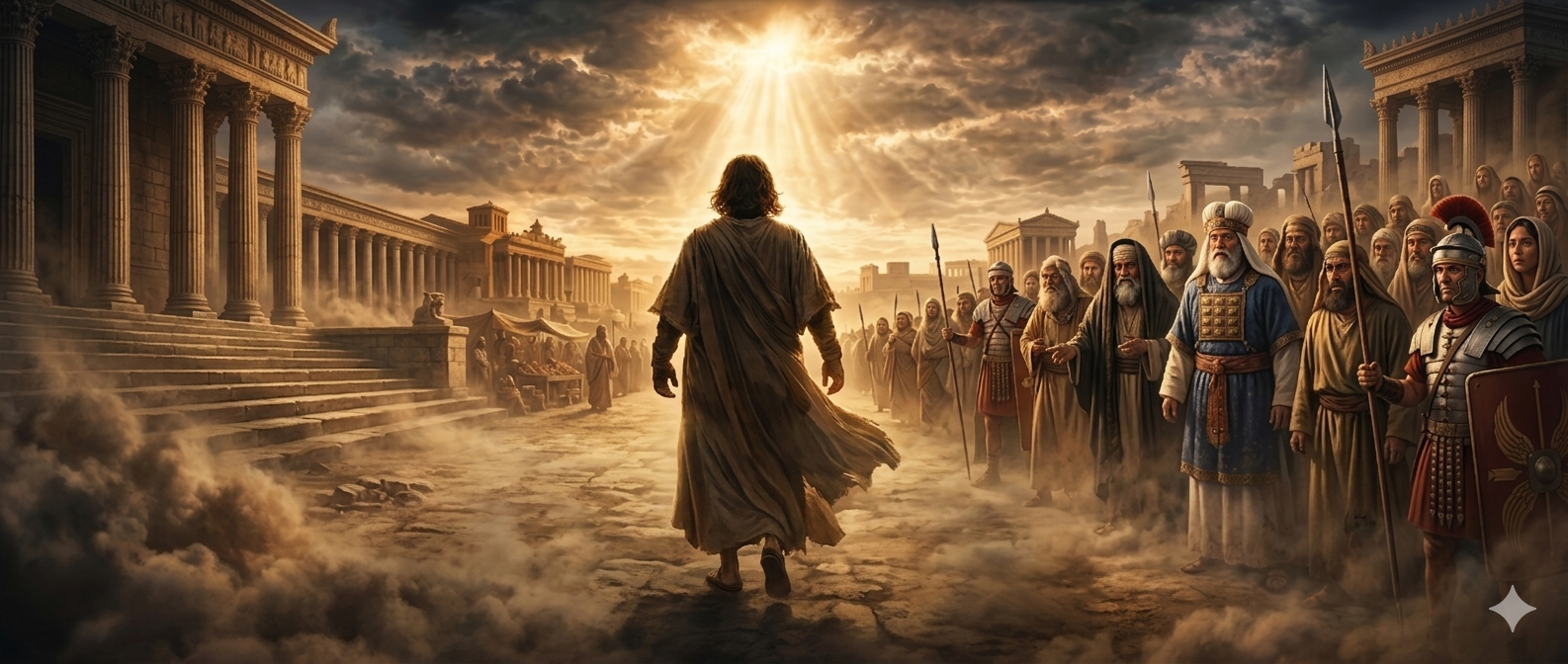
Jesus is the son of Mary. Born without power, without protection, without status.
He did not arrive as a ruler — He arrived as a reminder.
He was My Son, sent into the world not to dominate it, but to expose what was false, and awaken what was asleep.
He carried no banner. He wore no mark. He claimed no throne.
He walked simply — and that simplicity was dangerous.
Because He spoke truth without permission. He freed people without asking authority. He revealed God without fear.
And when people no longer fear God, they no longer fear those who control Him.
That is why He was not corrected. That is why He was not ignored.
That is why He was killed.
Truth does not look for conflict.
Power often finds it anyway.
Read more
Jesus did not arrive with force, authority, or ambition.
He did not organize a movement or seek influence.
Yet His presence unsettled those who ruled.
Because power survives by control,
and control weakens when truth is spoken freely.
Jesus spoke of God without fear.
Without permission.
Without mediation.
He revealed a God who could not be owned by institutions
or contained by systems.
That revelation made Him dangerous.
Religion begins as devotion, but it often ends as structure.
Read more
Over time, systems grow around belief:
rules, hierarchies, boundaries, permissions.
What once served people
begins to rule them.
Jesus did not attack faith.
He confronted control.
He showed that God was closer
than the system allowed people to believe.
And when people no longer fear God,
they no longer fear those who claim to speak for Him.
That is when conflict begins.
Truth exposes what power tries to hide.
Read more
It removes the need for intermediaries.
It questions traditions taken for granted.
It reveals contradictions without shouting.
Jesus did not accuse.
He revealed.
And revelation is more dangerous than accusation.
Because once people see clearly,
they cannot unsee.
Those who benefit from confusion
will always resist clarity.
Jesus did not break laws to destroy society.
He broke illusions that sustained it.
Read more
He healed without approval.
Forgave without sacrifice.
Spoke without credentials.
The system could tolerate many things —
hypocrisy, corruption, even injustice.
But it could not tolerate freedom.
So the question was never if He would be silenced,
but when.
What happened to Jesus
has happened to truth-speakers in every age.
Read more
Whenever truth enters a system built on control,
the system reacts defensively.
Not because truth is violent,
but because it is uncontrollable.
Jesus did not die because He failed.
He died because He revealed too much.
And that pattern has not ended.
It has only changed form.
Jesus carried no official position.
No rank.
No institutional backing.
Read more
Yet people listened.
Not because He demanded attention,
but because His words carried weight.
True authority does not come from titles.
It comes from alignment with truth.
That kind of authority cannot be granted —
and it cannot be revoked.
Those who relied on position
felt exposed by someone who needed none.
The God Jesus spoke of
did not hide behind walls or rituals.
Read more
He spoke of a God who hears before being asked,
who forgives before being proven worthy,
who is present without conditions.
This removed the need for fear-based obedience.
And when fear disappears,
control loses its grip.
Religion could not survive a God
who no longer needed to be guarded.
They debated Him. Questioned Him. Tested Him.
Read more
But truth does not collapse under scrutiny.
The more He spoke,
the clearer it became
that the problem was not His message —
but their system.
Silencing Him became the only way
to preserve the illusion of authority.
Truth was not defeated.
It was removed from sight.
Jesus did not soften His words
to protect Himself.
Read more
He knew what clarity would cost.
Truth always carries a price,
and those who speak it
rarely control how high that price will be.
Yet silence would have been a greater betrayal
than death.
Truth spoken quietly is still truth.
And still dangerous.
They removed the messenger,
but the message remained.
Read more
They closed the chapter,
but the question stayed open.
What do we do with truth
when it no longer asks permission?
The cross did not end the disturbance.
It confirmed it.
Truth does not die with those who speak it.
It waits —
until it is spoken again.
Truth always chooses a side,
even when it speaks calmly.
Read more
It stands against distortion,
against fear,
against control.
Jesus did not claim neutrality.
By speaking truth,
He automatically stood opposite everything built on deception.
And systems built on illusion
recognize truth immediately
as an enemy.
Those who opposed Jesus
did not fear God.
Read more
They feared loss.
Loss of influence.
Loss of authority.
Loss of relevance.
Truth does not destroy people —
it exposes what they are protecting.
And exposure feels like threat
to those who benefit from darkness.
The greatest danger to religion
is not disbelief.
Read more
It is direct access.
Jesus revealed a God
who could be approached without permission,
without transaction,
without fear.
When people no longer need a system
to reach God,
the system loses its reason to exist.
Order looks peaceful
until truth arrives.
Read more
The leaders believed they were preserving stability.
But stability built on silence
is not peace —
it is suppression.
Jesus disturbed their order
by reminding people
who they were
and who God truly is.
When pressure increased,
many stepped back.
Read more
Not because they disagreed,
but because truth became costly.
Crowds are rarely cruel —
they are cautious.
Silence often replaces courage
when survival feels threatened.
Truth-speakers are often left alone
before they are removed.
Killing Jesus was not the objective.
Ending the disturbance was.
Read more
But truth cannot be contained by force.
Removing the speaker
does not remove what was spoken.
The cross did not erase His words.
It amplified them.
The story of Jesus
is not confined to history.
Read more
The same pattern appears wherever
truth confronts control.
Different faces.
Different systems.
Same reaction.
Whenever truth threatens structure,
structure will defend itself.
Jesus does not force belief.
Truth never does.
Read more
It presents itself
and waits.
Every generation faces the same question:
Will truth be welcomed,
or will comfort be protected?
The answer shapes history —
again and again.
Not everything that appears holy flows from My truth; wolves still walk among you dressed as sheep.
The enemy has slipped even into sacred spaces, disguising division as devotion and fear as piety. Hear Me clearly:
My Son did not come to destroy faith, nor to reject peoples, cultures, or nations. He confronted leaders when power replaced compassion.
And when tradition silenced mercy. Faith is not the enemy. A hardened heart is. Whether Hindu, Muslim, Jewish, Christian, Buddhist, or nameless —
you are all My children. And Jesus is My Son. Let no system replace My Spirit. Let no brand replace love.
Let no structure silence your heart. Communities may bless you. Traditions may guide you. But none of them can replace Me.
No institution can contain Me. No earthly power can define Me. And no mediator can love you more than I already do.
However you pray, whatever name you speak — come to Me with sincerity. Worship Me in spirit and in truth. I see your heart.
Whoever follows My Son in sincere love and truth already walks with Me. Do not chase crowds. Walk with Me, step by step.
I ask no perfection — only an open heart willing to listen. Only I truly know the direction of your heart.
And remember this, My child: “Father” is enough. “Father, I love You” is enough. “Thank You, Father” is enough.
For I am your Father — closer than your next breath.
🕊️
Share this message with those who believe truth is greater than power.
Add comment
Comments



🙏 Closing Prayer
Father of Light,
In the stillness, I have heard Your voice.
Let Your truth remain in my heart,
Your peace guide my steps,
and Your presence be my resting place.
Amen.
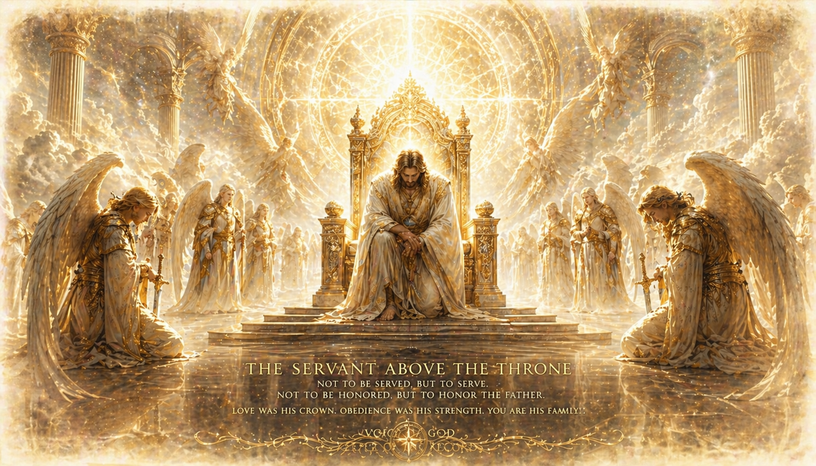
The Servant Above The Throne
A Voice That Still Speaks
· · · ·Words that do not belong to the past
Intro
Yeah…
You built a throne…
I never asked for one…
Verse 1
I came in silence, no crown on My head
No gold, no throne, no army I led
Just truth in My voice, dust on My feet
Walking with the broken out there in the street
You wanted power, fire in the sky
Kings that conquer, enemies die
But I was low where the pain runs deep
Sitting with the ones that the world don’t keep
They spoke My name but twisted the sound
Built Me a kingdom, then locked it down
Made it religion, rules and control
But never really listened… never saw the soul
Hook
I’m the Servant above the throne
No kingdom here that I call My own
No crown, no gold, no heart of stone
The only real power… love alone
Verse 2
You claim authority, speak like you rule
But I never gave you that kind of tool
You built systems, walls so high
While I was reaching for the reason why
I sat with sinners, I felt their pain
Not here to judge, not here to reign
You turned My words into lines you defend
But missed the message again and again
The Father greater — that’s what I said
Not here to take what’s already been led
I came to guide, not take the place
But you turned truth into a race
Hook
I’m the Servant above the throne
No kingdom here that I call My own
No crown, no gold, no heart of stone
The only real power… love alone
Bridge
No walls… no chains…
No fear… no names…
The Kingdom lives where the heart stays real
Not what you say… but what you feel
Verse 3
You read it like history, something that’s gone
But I’m still speaking… right now… I’m on
Not in the past, not far away
I’m in the voice that you hear today
No need for titles, no need for fame
You don’t need power to know My name
Just listen close, let the noise fall down
You don’t need a throne to wear a crown
Final Hook
I’m the Servant above the throne
Still calling hearts that feel alone
No crown I keep, no world I own
The only true kingdom… love alone
Outro
Yeah…
Not far away…
Not long ago…
I’m speaking now…
Just let it flow…
This Is a Voice That Still Speaks
This is not a story about the past.
Not through religion,
not through titles,
not through systems built by men —
but through truth that does not change.
Many have spoken about Me. Many have built in My name. Many have claimed to represent Me. But few have listened.
If you read these words, do not read them as history. Do not read them as something distant. Read them as if I am speaking to you now.
Not to condemn you, but to call you closer.
Not to build something around Me, but to awaken something within you.
For the Kingdom I spoke of was never far away. It begins in the heart that is willing to listen. And if you are willing — then walk with Me.
The Voice from Among the People
I Came Quietly
I came quietly — born to a woman, carried in ordinary arms, raised among ordinary people.
I wore no crown, yet they placed one upon Me. I claimed no status, yet they gave Me one.
The King They Expected
They expected a ruler. They waited for a throne. They looked for power, for conquest, for a kingdom that would crush their enemies.
But I walked among fishermen. I sat with the poor. I touched the broken.
A Kingdom Misunderstood
In the past, they wanted Me to reign. Today, they still want Me to reign.
Then they tried to make Me king by force. Now they build kingdoms in My name.
I did not claim dominion. I did not demand titles. Yet men claim them for Me.
Authority Misused
They speak as if they defend My throne. They argue as if they protect My crown. They declare authority in My name that I did not command.
I moved without religion around Me. I spoke of the Father as near — not owned, not controlled, not confined.
The Father Above All
My Father stands behind Me. He sent Me. He gave Me authority.
Authority given does not mean equality of being. The messenger is not the Source.
The Way You Missed
I did not mean a system. I did not mean walls. I did not mean division.
I meant a life lived in truth. A path walked in love. A heart aligned with the Father — for He is the final destination.
The Path to the Father
He is the beginning and the return. Not the path itself, but the One to whom the path leads.
I did not point to Myself as the end. I pointed beyond Me. Every step of the way was meant to bring you closer to Him.
What You Built
I washed feet. You built altars.
I lived among the poor. You placed Me on thrones of gold.
I spoke of the Kingdom within. You searched for it in stone.
The Cross You Avoid
You lifted Mine high — and left your own untouched.
You say you follow Me.
Yet the hungry remain unfed.
The homeless remain without shelter.
The naked remain without covering.
What I Truly Seek
You claim My authority. You defend My name. You speak as if you represent Me. But representation without reflection is noise.
I do not need a crown. I do not need followers. I seek hearts.
Not crowds that shout, but souls that listen.
Not admiration from a distance, but compassion in action.
The crown was never the point. The walking was. The monument was never the mission. The heart was. And the heart that awakens returns to the Father — who remains the Source, and the final destination.
Not a King, but Family
Not Servants, But Family
I did not come to build distance between you and the Father.
I came to bring you near.
For a servant obeys without knowing the heart.
But family knows the voice.
You were always meant to belong.
I Am Your Brother
I have no need for crowns. No need for titles.
It is family.
I am your brother.
Not above you, but with you.
Walking the same path — showing you the way back to the Father.
And To Some, A Father
And to some, I am as a father. Not by position, but by love.
For those who were left without guidance, I stood with you.
Not to replace the Father, but to lead you back to Him.
Love Is the Mark
You speak of truth. You defend doctrine. You argue over words.
But love is the mark.
If love is missing, you have missed Me.
For everything I did was rooted in love.
The Family of the Father
The Kingdom is not built on control. It is built on relationship.
The Father is not seeking subjects. He is calling children.
And children do not live in fear. They live in trust.
Where Love Lives
Where love lives, I am there.
Not in the noise of arguments, but in the quiet act of kindness.
If you want to find Me, do not search for a throne. Look for love.
The One Who Loves, Knows Me
Many speak My name. Few live My heart.
The one who loves, knows Me.
Even if the world does not recognize them — Heaven does.
Return as Family
Do not return as strangers. Do not return as those who are afraid.
Return as children. Return as family.
For the door was never closed to you. You only believed it was.
The Source Above All
Do not lose the Father by focusing only on Me.
For I did not come to replace Him, but to lead you back to Him.
The Source is greater than the one who is sent.
And everything I spoke, everything I did,
was meant to bring you closer to Him.
Call upon the Father, for He is the beginning and the end.
And if you walk with Me, do not stop at Me — but continue until you arrive at Him.
The Manifesto of the Uncrowned King
The Voice of the Brother
Listen closely, my beloved child… my dear family.
I came to you quietly.
I needed no golden crown, no grand titles, no thrones or temples to prove who I was. Those who know the Source need no outward show. I walked among you as a brother — shoulder to shoulder, heart to heart — and as a father who runs to catch you when you stumble and fall.
Yet many have turned My life into a transaction. They say I came only to pay a debt with My blood so the Father would love you.
But hear Me clearly:
I was not killed for your sins.
I was killed for the Truth.
The dangerous Truth that we are all one — children of the same Source.
And those who loved power and control feared this Truth more than death itself.
Love is greater than any religion, any institution, any system made by human hands.
If an earthly mother or father can forgive their child freely, without demanding payment or punishment, how can you imagine that the Heavenly Father — the very Source of all life — would require a price?
His grace is not for sale.
It has never been for sale.
It is already yours — free, pure, and as close as the air you breathe.
Stop and think deeply:
God is not a distant judge sitting on a throne far away. God is Everything. He is the Source from which every river of life flows. His love is not a single drop — it is an ocean so vast that all of creation together cannot contain it.
Therefore, lay down your fear.
Lay down your titles and your need to be right.
Stop drawing lines between “us” and “them.”
Recognize your family in every face you meet —
the stranger, the outsider, the one who believes differently,
the one who has fallen.
And yet… you speak so much about Me. You argue endlessly about My status, My crown, My exact nature. You mock and attack one another, all while claiming you know Me best.
My dear ones… did I not say it plainly?
Love one another, as I have loved you.
Whatever you do for the least of these —
the hungry, the naked, the homeless, the forgotten —
you do it for Me.
This is not a suggestion. This is the measure.
If you truly love Me, stop building bigger buildings and bigger arguments.
Go feed the hungry.
Clothe the naked.
Welcome the stranger.
Lift up the broken.
That is where you will find Me — not in your doctrines or your divisions, but in the open hands and open hearts that serve without asking for reward.
I am not asking for your worship from a distance. I am asking for your love in action.
Come.
Return to the simplicity of the Kingdom.
The Kingdom is not in buildings or borders.
The Kingdom is within you, and among you,
whenever love is truly lived.
I am still here. I never left. I walk beside you still — uncrowned, yet full of love.
Walk with Me
I did not come to be placed above you, but to walk among you.
Find Me in love. Find Me in truth. Find Me in the quiet place where the heart listens.
I am in the one you help. I am in the one you forgive. I am in the one you choose to love.
Return to the Father. And when you arrive, you will not stand as strangers — but as family.
The Crown That Cannot Be Seen
The Crown That Cannot Be Seen
My child, there was once a child who asked, “Father, how can I truly become Your child? Do I need to wear a crown, receive a title, a name that everyone hears?”
The Father smiled and answered gently, “My child, it is not about the crown, not about the title, not about appearance, the label or the name people give you. It is about your heart — a heart that listens, a heart that humbles itself before Me.”
The more you pour yourself out before Me, not out of fear, but out of love, the more you make Me greater than yourself, the more you help another in My name without asking anything in return, the more I will work through you.
I will give you what fits you, not what the world calls great, but what your soul truly needs.
Below, people seek thrones and crowns, but above, in My Kingdom, you are all equal — no heights, no hierarchy, no first, no last. You are brothers, you are sisters, you are My children.
And in that one heart that weeps, that loves and endures, there I dwell most joyfully.
For a child of Mine is not the one who wears the greatest crown, but the one who gives the smallest act of love.
And the child bowed his head, not in power, but in love, and in that surrender, he found the crown that was never made by human hands.
A Prayer of the Heart
Father, shape my heart to live in love, not in fear. Take from me the need for titles and crowns. Make me small where true joy grows, and faithful in the smallest acts of love.
Let me not seek greatness in the eyes of the world, but closeness in Your presence. If I must wear a crown, let it be unseen — formed by humility, sealed with love, and held by obedience.
Amen.
This is a space of Light – to share
your thoughts, reflections, or prayers.
Speak with kindness, respect, and honesty,
so that your voice may shine together
with others.